Wednesday, September 24, 2014

Creative imagination is the mother of all innovation

We’re all familiar with the phrase, ‘necessity is the mother of all invention’. Well my attention was drawn to a recent BBC article which put forward the viewpoint that today, with very few exceptions, there is no such thing as a truly new invention.

It suggested that ‘despite what marketers would have us believe, recycling inventions and the cross-pollination of technologies for new applications are at the heart of all developments in the 21st Century’. The iPhone revolution was cited as an illustration of this 'invention illusion' stating it’s not really a new invention but just a much better version of the original phone introduced by Alexander Graham Bell in 1876. As the BBC says ‘What Apple achieved with the first iPhone was truly ground-breaking, but it was the result of very clever innovation, with existing technologies applied in new ways. It was not a new invention’.


Anyway, this article reminded me about an old marketing lecturer who boldly proclaimed– ‘Ideas are nothing more and nothing less than the NEW combination of OLD elements’. To my mind, while exceptions may exist, there is a general truth to this. Coming back to Apple for a moment, you only need to look at how Jonathan Ive, Apple’s chief designer, borrowed extensively from the design ethics of Braun’s great Dieter Rams.


In fact, scrutinising many of the things we think of as truly ‘original’ inventions unearths that many of these evolved out of existing know-how and artefacts rather than being invented from scratch. Two examples that spring to mind are the printing press and the internet. The printing press was ‘invented’ in 1440 by Johannes Gutenberg yet many of its components had been around for centuries beforehand. However Gutenberg had the insight and gumption to piece them all together. Likewise with the internet. While Tim Berners-Lee is rightly accredited with introducing the ‘world-wide-web’ in 1991 it didn’t suddenly spring out of the ether. Instead, the internet actually grew slowly over a number of decades from the evolvement of electronic computers in the 1950’s with emerging networks and protocols.
                                     
So there is no shame in finding and applying different combinations of existing knowledge in fresh and imaginative ways including looking beyond the immediate competitor set to find out what others have done.  Akin to Kevin Bacon 6-degrees of separation meme you can always establish a connection with the seemingly unconnected in drawing inspiration from a much wider pool of know-how. Which brings me nicely back to the title of this article – ‘Creative imagination is the mother of all innovation’ where cultivating creativity can be amplified in two ways:

               1. Developing smart circles
Whilst the process of managed innovation might sound counter-intuitive, approaching innovation in the right manner can help cultivate and accelerate the creation of transformative ideas.  I read another article recently that talked about forming creativity circles – a handful of smart people across disparate disciplines working together in a blended fashion, often in a shared immersive space, to solve the common challenge. This follows the philosophy we have at we are experience in working to the mantra that great ideas come from the many (within the creative circle). Working in a flatter, highly collaborative way with clients enables us to energise, complement and spark off each other in a way that wouldn’t happen by taking a more traditional pyramid like organisational approach. So by managed innovation, I really mean bendy and flexible management, rather than predetermined or rigid.

2Encouraging lean thinking
Something else that sounds counter-intuitive is the notion that a paucity of time can actually be good for the creative development process. While there is often the harsh reality of too little time and money on a project, rather than sulk and throw the proverbial toys out of the pram the team at we are experience embrace this challenge. We’ve actually discovered that imposing some scarcity on the managed innovation process mentioned above actually focuses the creativity and efforts of all involved. Akin to hot-housing a solution for a pitch (honestly, how many pitches have you worked on that had too much time?!?) this requires you to be resourceful while working at pace. That’s why we are firm believers in deploying a nimble way of working with clients as part of our Service Design proposition. This lean and pragmatic approach includes forgoing high fidelity prototypes at the initial stages to ensure rapid progression from initial ideas to fully-fledged end solution.

As the world is forever shifting forward at an increasingly accelerated pace of change, companies need to be in a constant state of innovation.  Only the fleet of foot and mind will survive and prosper.

(Extract of a blog originally posted on the service design consultancy we are experience website - http://www.weareexperience.com/).


Finger-print banking – does it get your thumbs up?

Card free library membership
The other day my daughter causally mentioned how she doesn’t have a membership card for her school library. Instead she uses her thumbprint to manage her account, from taking out and returning books to paying fines.

This got me thinking about the plethora of cards I carry around in my wallet and how it would be possible to do away with these at the swipe of a hand through fingerprint technology. Imagine your hand became your bank card, credit card or loyalty card with the benefit of always being with you 24/7. Now you could argue your mobile phone is always with you too, so why not use this instead as the capabilities for mobile payments grow. However unlike a fingerprint you run the risk of losing or misplacing your mobile. And it’s just another ‘thing’ to interact with.


Pay for purchases using your fingerprints
Paytouch recently announced their biometric payment method as showcased at the recent Next Web Conference, where users use two fingers to simply make payments. For the consumer, there's no longer a need to carry a credit card; for the retailer, it's able to encourage impulse buying in an entirely new way - the whole process takes only about five seconds, and requires no passwords, signatures, or pretty much anything other than two fingers. 

However it’s not an entirely new technology. A similarly named PayByTouch launched 6 years ago around the same concept was quickly discredited as being reputedly run by the criminally corrupt.  There is also the example of biometric kiosks being installed in rural Indian villages to help villagers obtain access to funds through fingerprint scanners rather than ATM cards and PINs.

Many naysayers assert that biometric payment processes won’t work, as the risk is too great from a security perspective. They say that unlike a mobile phone you can’t just change to another device if the security is breached. However criminals already target phones and credit cards that can be skimmed, lost or stolen with database compromise said to be the most common form of credit card theft.  So the risk isn’t really that much greater and could be mitigated through combination with other security measures such as pin numbers or encrypted password protection.


Smartphones leading the way
In fact Samsung’s Galaxy S5 is the first smartphone that uses fingerprint to authorise payments in stores and online. The Galaxy S5’s payments system is the first commercial deployment of a new protocol developed by the FIDO Alliance, a group founded by tech companies to end our reliance on insecure passwords. Indeed, fingerprint readers are expected to become commonplace on mobile devices over the next year or so.

“Today people are having to type in nine-digit passwords everywhere, including one-handed on the subway,” says Joel Yarbrough, senior director of global product solutions at PayPal. This leads many people to use simple passwords and to reuse them across multiple services. This, in turn, makes it easier for criminals to take control of accounts. “Building a smart biometric experience solves both usability and dramatically increases the security level,” says Yarbrough.


So who is to say the evolvement of this smart technology by mobile manufacturers such as Samsung won’t in turn lend themselves to cutting out the mobile phone all together? Whether it will come to fruition remains to be seen, but the dreamer in me who likes simple elegant solutions is willing to give this a double thumbs up.

(Extract of a blog originally posted on the service design consultancy we are experience website - http://www.weareexperience.com/).

Why polished diamonds beat polished turds

Isn’t it great when reality exceeds expectation?
This blog was inspired by a recent visit to Glasgow. More through necessity rather than choice I ended up staying at a Premier Inn. Being my first visit I thought it would be along the lines of Travel Lodge – lost cost and functional. However I was pleasantly surprised to find my room was spacious enough to bring agoraphobics out in a cold sweat. The bed was king-size, topped with a choice of soft or firm pillows depending on your preference with a great night’s sleep money back guarantee thrown in for good measure. The staff were incredibly friendly and helpful. Kids under 16 can stay and eat for free. The full fry up breakfast was great quality and offered lots of choice – with the best part being you could munch through as much as you wanted for £8.95 (which for me with hollow legs was like manna from heaven). And the check-out time was a leisurely 12 noon.

What’s not to like?  And the fact that I’m sharing this with you shows how the power of a great experience instigates word of mouth recommendation, which is the most powerfully persuasive form of ‘marketing’.

However not all companies are like Premier Inn…


Isn’t it shitty when expectation is let-down by reality?
Do you recall a time when a product or service failed to live up to expectation? I bet you can as unfortunately there are still plenty of brands guilty of delivering a sub-par experience.

Now, think of an airline company renowned for poor customer service. I would also wager that many of you immediately thought of Ryanair. Their CEO Michael O’Leary has famously been quoted in the past as saying  customers are  “idiots”, people that forget to print their boarding pass are “stupid” and told anyone looking for a refund to “**** off”.

Which is counter-intuitive, when you think how successful they’ve become in catering to 81 million passengers a year.  Or had.


It’s time to step up to the plate
As Bob Dylan once sang, ‘times are a changing’. Today, empowered buyers are increasingly demanding a new level of customer obsession. More connected, more informed and more discerning they are less inclined to put up with hyped up marketing promises some companies resort to (at great expense) to shore up shoddy experiences.

So it’s not surprising to see time also catch up with Ryanair who have recently seen passenger numbers dive resulting in them issuing a first profit warning in 10 years. However what is really interesting is that Ryanair is now looking to cast off its ‘bad-boy’ image having realised that customers do have a choice and that customer respect is necessary as good value isn’t solely represented by low price.

As a result of upping its customer service and improving its website experience Ryanair is now shifting its strategy and marketing budget to focus on more brand-led campaigns as they seek to attract a less price sensitive wider audience. Such improvements include cutting some fees, introducing allocated seating and offering a grace period where people can make minor alterations to bookings. O’Leary himself has even gone on a charm offensive aimed at addressing its poor reputation for customer service. “We want to people to like flying with us not just for the savings but also because they like us,” he says. As U-turns go it’s a biggie, however Ryanair have rightly taken the approach of putting the delivery in place before driving awareness around the ‘promise’.  A canny case of credibility before visibility.


Smart brands are flying high
Brands that put customer experience at the heart of their strategy lead the way with hard evidence from Forrester showing that a focus on creating great customer experiences far outperform the laggards in terms of total return.

This is supported by further research evidence from Accenture:

‘UK consumers are unimpressed by brands’ customer service in digital channels leading 53 per cent to switch brands in at least one industry.’

It  also estimates that the UK’s ‘switching economy’ – comprising the revenue from consumers who leave one brand for another each year – is worth £116bn, or 12% of UK consumers’ annual disposable income. This is partly the result of companies focusing marketing efforts on bringing in new customers rather than seeking to retain the ones they already have.

Accordingly, 36% of consumers rate their loyalty towards brands as 1 to 3 on a 10-point scale, with only 16% rating it from 8 to 10.

Coming back to airlines, in Australia the Promise Index, which measures whether a consumer’s experience exceeds their expectations, placed Air New Zealand (ANZ) joint top in their findings. It found that value for money, creating a customer experience and being empathetic to customer’s specific needs are what counts when it comes cultivating consumer loyalty.  ANZ’s commitment to customers is reflected in their company values which state ‘We serve all our customers with the belief that if we can make them smile or enjoy their day, it is such a privilege to us.’

Not unexpectedly, ANZ recently reported a 29% rise in interim profit before tax outshining other airlines in the sector. Perhaps another reason why Ryanair is belatedly beginning to taking notice?


It’s the age of the customer
As Accenture says, today the journey is continuous because the touchpoints consumers are exposed to are ‘always on’, and customers can constantly re-evaluate their purchase options. In what they call the “Nonstop Customer Model”, it is easier for customers to compare a provider’s promise versus delivery, and how the overall experience matches up to their own expectations.  Furthermore they say that companies that play to win recognise that today’s customers will define their own experience based on their personal expectations and needs.


More companies are waking up to this fact. The SODA Report 2014 asked companies to identify the ‘single most exciting opportunity for 2014’. The highest ranked response was ‘customer experience’.

For an optimal customer experience, I’d suggest companies need to ensure they have a deep understanding of human behaviour, harnessed creatively with the right technology and aligned to a flexible and responsive culture with an emphasis on ongoing testing and learning. At we are experience we’d go further to suggest it’s not enough to just deliver a good product or service experience at an operational level (such as airplanes running to schedule). Instead to prosper in the longer term, companies must seek to raise customer satisfaction through the roof with forward thinking ideas that enrich the overall experience and disrupt conventional market norms (such as when ANZ introduced the world’s first lie down economy bed in 2010).


For brands still faking it, now is the time to step up.  After all a shiny turd by any other name is still a turd. Surely it is far better to invest in polished diamonds by creating products and services that are worth talking about and delight consumers.

(Extract of a blog originally posted on the service design consultancy we are experience website - http://www.weareexperience.com/).

Like death and taxes, there’s no escaping colour.

Colour – it’s not all black & white
AkzoNobel the world’s leading global paints and coatings company whose brands include Dulux unveiled Teal as the Colour of the Year in 2014. To quote from one review:

The top trend colour for 2014 perfectly combines the natural harmony of green with the tranquillity of blue. Reflecting the overriding trend of unlocking, this muted teal has a gentle character and is a favourite in the world of design. Deeper and more sophisticated than turquoise, teal has a subdued richness which is often used to describe tropical seas of shimmering bluish green.

This is all rather nice…and as my daughter had her room painted teal last year it’s great to inadvertently know she’s ‘on trend’.

Colours are all around us, many laden with degrees of meaning and significance. Some colour associations are more universal such as grey normally being associated with gloom. Other colour associations depend on culture such as…

Red in Egypt = Death
Red in China = Happiness
Red in India = Life

Colour can also convey different associations at a more micro level. For example – why are people more relaxed in green rooms? And why do weightlifters do their best in blue gyms?

So the meaning of colour is often dependent upon context.


Great UX needs the right colour palette
Given colour has a subconscious effect on our lives, an understanding of colour meanings in business gives an invaluable tool to get the best response to marketing and delivery efforts that help support a successful business.

This is also true when considering the impact of colour on the visual design of a brand’s website from a product and service perspective.  After all as great UX is all about achieving a potent mix of usability and appeal, colour can play a leading role within this.

Of course brand guidelines play a guiding role in what colours are in or out of scope. And colour wheels help choose contrasting and complimentary colour schemes. But if you do have leeway in the development of colour design then a solid understanding of the significance of colours must form a prerequisite part of your judgement.  

And it’s not just the association of colours that visual designers need to be aware of. They need to also think of their audience and the ‘impact’ colours have on their viewing of these too.

Studies have shown that as people become older they lose the ability to distinguish between colours as a part of the eye called the cone receptor becomes less capable of processing hues. This is particularly true for colours on the yellow-blue axis where what appears as uniquely green to younger observers will appear more yellowish to older viewers. 

I also discovered another interesting user study which established that 71% of respondents chose red as the colour that stands out the most (from a limited selection), while only 18% chose green. However before jumping to the conclusion that red should be used more so than green for say ‘call to action’ buttons the same study also showed that green is the colour people most associate with success, while most respondents chose red as the colour of failure. So the first principle is to understand the context of colour relative to your target audience. Then design.


So what does the colour of success look like for you? 

(Extract of a blog originally posted on the service design consultancy we are experience website - http://www.weareexperience.com/).

Domino's – on behalf of all pizza lovers please B.O.G.O.F.

Got the munchies…
After a full-on day at work, I fancied a nice easy evening lounging on the sofa munching my way through pizza. Which was perfect timing, as being a regular Domino's pizza loving customer I knew I could take advantage of their long running 'Two For Tuesday' offer to buy one pizza and get another one free, all conveniently delivered to my front door.

Or so I thought. 

Got the hump…
Firing up my Domino's customer app I was faced with lots of deals to choose from, except the one I wanted. Mmmm, I thought...maybe I now have to go through the order process to activate the regular B.O.G.O.F. option. Or maybe not, as it turned out to be case.

  
Got the deal…
Undeterred, I took to Google to investigate further, thinking they'd perhaps stopped doing the 'Two For Tuesday' deal. Nope - the deal was still on, as I saw from the boldly promoted ad on their website. Good news for me as I eventually managed to scoff two pizzas for the price of one. 


Got the message?
But shame on Domino's. While the more forgiving amongst us might believe it was just a content glitch with their app, the more cynical amongst us (OK me!) believe it was some not-so-clever ploy to prey on customers’ loyalty by withholding their 'Two For Tuesday' offer.


C'mon Domino's, don't treat your loyal customers as mugs. Because if you do, you're liable to experience a very different kind of B.O.G.O.F. 

(Extract of a blog originally posted on the service design consultancy we are experience website - http://www.weareexperience.com/).


Jawbone UP health wristband gets users DOWN

Jawbone makes wonderful products including the Jambox portable wireless speaker and UP health wristband, both of which I have the pleasure of owning.
However great products by themselves don’t necessarily make for great brand experiences – especially when things go wrong and you need some service support and advice.

Customer Service tumbleweed
This is where Jawbone, and Aliph the company behind the brand, appear to let themselves down.
I recently had a query regarding my Jawbone UP, so went online to their sponsored community home page called ‘MYTALK’ where it reassuringly claims ‘FIND ANSWERS QUICKLY’.
Not being the first person to have the same query I quickly found a conversation thread to follow and hopefully find an answer. So far, so good. However I was soon disappointed as I followed the thread from its start in September 2012 all the way through to April 2013 where it came to an abrupt and frustrating halt. You see, while there was plenty of conversation between users, not once did Jawbone offer its opinion, support or even apologies for not being able to find a solution. It just kept a stony silence from the side-line. 

  
Beware the spurned ‘little guy’
Many people hate being snubbed or ignored – and hell hath no fury like a customer who feels a brand doesn’t care about their plight.  And so if they choose to, the internet gives these people a giant megaphone to make themselves heard loudly, far and wide. A live example of this is from a man called  Hasan Syed who bought a promoted tweet to complain about the loss of his father’s luggage after a perceived lack of good customer service from British Airways.  This resulted in thousands of retweets and a belated reply from BA with an offer to look into the lost baggage issue.

Catch the whispers before they become shouts
It’s not too late for Jawbone to learn a lesson or two from other companies including retail brands such as John Lewis whose staff care about and excel at providing customer service that goes the extra mile.
If they continue in their failure to sufficiently manage their customer service, then when it comes to future purchases customer’s will vote with their wallets, while those prospective buyers who overhear their disgruntlements will about heel and fall into the arms of a rival brand.

So Jawbone if you are listening, can you please respond to the whispers of your customers before they become shouts?


(Extract of a blog originally posted on the service design consultancy we are experience website - http://www.weareexperience.com/).

A little bit of friction is no bad thing

“Sometimes things with a little more friction make unique behaviours possible. We should be careful of only designing for ease-of-use and forgetting about what is good to use”. 

This nicely captures the essence of a thought-provoking conversation I had recently with a smart design research contact.  Following on from this, I mentally gathered a couple of real-life examples and insights to help hammer home this sentiment which I now share with you:

1.       Speedier quotes aren’t always desirable
While searching for the best insurance quote can be financially rewarding not many people would honestly say they ‘enjoy’ going through the process of doing so. Therefore you would think any design improvements that reduced the overall effort and time required to find the cheapest quote would be welcomed. However you’d be wrong.

Working on the website development of a UK comparison website unearthed an insight that at first glance felt counter-intuitive. While users wanted a speedier process, research found that a significant improvement in absolute speed was less desirable. You see, while many people said they were looking for the cheapest quote what they really wanted was the best value quote relevant to their personal outlook and circumstances. A superfast effortless process increased their concerns around inadvertently making the wrong choice. It also raised fears about a more streamlined selection of results possibly foregoing key user considerations such as minimum excess fees or no claims bonus. Subsequent to this, the design implication recognised the importance of including some key added steps to return the right results rather than stripping the process down to the bare minimum to achieve the fastest results. 

2.       Saving money could cost more in the long run
A finance client looking to offer a richer and more user friendly digital proposition for brokers and end clients could have completely rerouted all inbound queries via its new digital channel under development. However while this would have saved them a hefty sum by reducing the cost to serve via their call centre they were forward thinking enough to recognise the inherent value of still prioritising some key traffic queries via the telephone. You see, they understood that not all calls were ‘bad’ and that certain queries unlocked value that could only be cultivated when handled through trained call centre staff.


3.       Fandom is rewarded through dedicated effort
My final and most recent example cropped up at the excellent 2013 dConstruct technology and culture conference run in Brighton. Maciej CegÅ‚owski who lovingly crafts the bookmarking service Pinboard amongst other things gave a great speech around the obsessive nature and idiosyncrasies of fandom. He talked about how ‘fans are inveterate classifiers who bend websites to their will’ to support, share and grow their passion across online communities. However one key point he noted in servicing their digital needs was that the fan as a tool-using animal doesn’t like an experience that is too slick or easy to use.

Why is that? Well if you look at the characteristics of fandom it’s about people who spend a large chunk of their time, energy (and in many cases their savings) on their passion, even down to the most minor of details. Aligned to this there is also an element of social preening within community websites around their level of fan commitment. Therefore to be a true fan requires devoted enthusiasm, which in this case was manifested through their ability to master some rather clunky tools.


If anything, I hope the above illustrations help serve to underline that good design must always start with a clear understanding of the user mindset, motivations and goals aligned to the business needs. With this in mind you can hopefully avoid the design peril of wrongly taking a frictionless approach that results in you slipping on thin ice.


(Extract of a blog originally posted on the service design consultancy we are experience website - http://www.weareexperience.com/).

Slave to love

I’m not talking about the classic Bryan Ferry song, but my growing desire to break free from my iPhone.
The unveiling of the new iPhone 5S and the ‘cheap’ plastic backed 5C version (an eye-watering £469 vs. the 4S which now retails at £349) has left me somewhat under-whelmed. A new Touch ID fingerprint scanner to beef up security is nice, as is the faster processor, but boosting the camera capabilities with 1,000 flash settings misses the point when it still only offers a puny 8 megapixels compared to the competition.
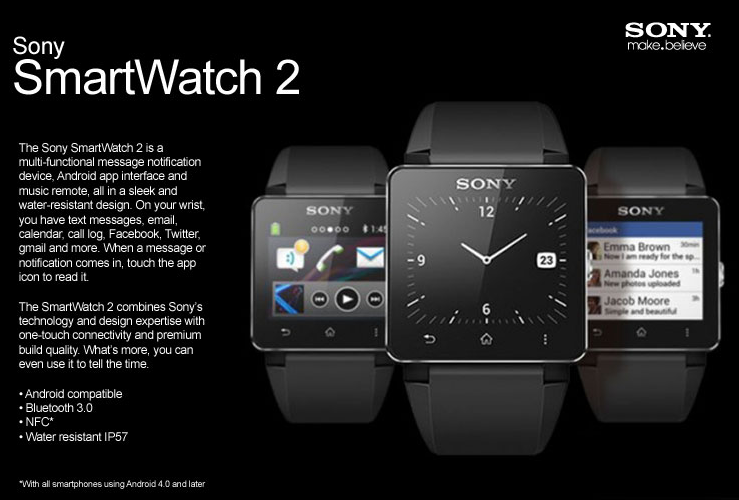
Akin to a real long-term relationship that’s lost a bit of sparkle, my head has recently been turned by more eye-catching phone candy.  Or more specifically the Sony Xperia Z1 packed full of great user benefits such as a whizzy fast processing speed, high quality video wrapped in a nice interface and a camera that pushes the boat out. And that’s before I even consider the various seductive add-ons such as the snap-on QX10 smart lens and complimentary Smartwatch2. Both appeal to my inner geek which I’m finding hard to resist.
But resist I will. The reason is pure and simple – my iPhone might not be the best phone currently on the market but it has a big part of my life entwined within it. Whether it’s finance, health, news, shopping, sport travel or work … you name it I have an app for it.  Given the time invested in avidly collecting and using these apps over the years. I’m hooked and can’t bear the thought of starting all over again. Or losing forever those apps I can’t get with Android.
So I guess for now I will restrain myself to sneaking sideway glances at other mobile offerings as they emerge onto the marketplace. However, while I still intend to keep my iPhone, my loyalty is feeling less ‘loved-up’ and more ‘locked-in’ – so it’s only matter of time before I reach that make or break point.

(Extract of a blog originally posted on the service design consultancy we are experience website - http://www.weareexperience.com/).

Why is it important to Think Big, Act Small?

I want to change the world
Chris our MD often proclaims this. He may not realise it but Charles Darwin would pat him on the back for this sentiment as his viewpoint was “it is not the strongest of the species that survives…it is the one that is most adaptable to change”.
However not everyone is like Chris, where you often hear people say they don’t like change.
And it’s not just people who don’t like change, but often businesses and brands too. While start-up companies through necessity have to create a meaningful point of difference to carve out market space, as they become more established this innovation often takes a back seat. At best, this is due to a build-up in bureaucracy as companies grow which reduces their pace of change to a sluggish crawl. While at worst, institutionalised thinking deliberately switches focus from innovation to protecting the status quo and fighting off the newer challenger brands from ‘their’ turf – the new kids on the block to which they once belonged.

Change is the only constant
However both people and businesses can’t stop change happening all around them.  According to the Harvard Business Review ‘in the new world of business, with so much change, so much pressure, so many new ways to do things, the middle of the road is the road to nowhere’.  Or as Jim Hightower, a colourful Texas populist, is more bluntly fond of saying, "there's nothing in the middle of the road but yellow stripes and dead armadillos."  So for businesses to grow and prosper they must recognise that a larger share of the future very seldom comes from an extrapolation of the present. 
Of course the tyranny of change is that you are damned to failure if you change nothing. And you are still damned to failure if you do everything at once. There is also a saying that if one doesn’t know which port you are sailing to then no wind is favourable. So for change to succeed it must be managed with a degree of flexibility and with a clear goal in mind.


Make change before you have to
People may not like change, but they do like better. And therefore they will gravitate towards better solutions that emerge which will test and strain consumer loyalty to existing brands (you need to look no further than some of the recent reported backlash against Apple).  Given a choice it is far better for a business to develop it’s offering from a position of strength rather than being forced to through urgent necessity, by which time it may be too late to halt any slide.

As a Service Design consultancy, we are experience is in the ‘better’ game of helping challenge and focus clients to developing  transformative product and service offerings around our work mantra ‘Think Big, Act Small’.


We’re about the big ideas and large-scale thinking. Our approach enables clients to make smart decisions about their businesses, products, services and processes. But we’re also about acting small; we make things happen quickly. Working in a highly collaborative and agile way we push beyond conventional thinking to rapidly develop and deliver these breakthrough solutions. 

(Extract of a blog originally posted on the service design consultancy we are experience website - http://www.weareexperience.com/).

Saturday, February 09, 2013

Plot revenge on call centres with this new app


Please hold

Thanks to call centres the British people are a lot like Debbie Harry’s Blondie: ‘Hanging on the Telephone’.

According to a recent report, we typically waste around 45 hours each year waiting to be connected to a call centre representative.

This won’t be surprising to students of Behavioural Economics who know that – rather counter intuitively – people are more willing to hold on longer if told all lines are busy compared with being promised that their call will be answered soon. Why? The notion of having freely available operators suggests an unpopular service that is consequently not worth holding for. Whereas a message saying that all lines are busy and requesting people to hold or ring back later encourages them to stay holding in the queue longer as it suggests a popular service worth waiting for.

Power of scarcity value

Many a company plays on the lure of this scarcity value, which dictates that if we perceive something to be scarce it takes on a greater value in our eyes, whereas if it is plentiful the perceived value falls. Apple is a skilled practitioner in the art of creating scarcity – when launching new products it creates a lot of buzz and excitement in the marketplace and then holds back on distribution at the launch to further heighten demand.


From call centre hell –
to hell with call centres

However, coming back to our call centre example it looks like the tables are about to be turned. A new phone app has been developed that promises to ‘give you back’ your waiting time.
The ‘WeQ4U’ service claims to not only take the angst out of contacting call centres, but will also save users about 30p per minute. Through use of ‘queuing robot’ technology people can put the phone down when told to wait for a call centre to pick up. The phone stays connected and will automatically ring the user’s own phone once an operator is free.
So in a nice twist of fate call centres will now be held in line before being put through to customers.


Creating Frankenstein’s monster?

For some reason the above reminds me of the story of the nursery school, which fed up with parents picking up their offspring late decided to introduce penalty charges. This sounded great in principle but rather than reducing late pick-ups the penalties boosted tardiness as it effectively legitimised the offering of a cheap baby-sitting service.

Likewise with the call centre app. While the intention is good, I can’t help wonder if in a similar way this creates a Frankenstein’s monster where the consumer ends up becoming the ultimate loser. While people may get back their waiting time they could still end up paying more for this ‘convenience’ as call centre managers realising waiting time is no longer an issue reduce their staffing service levels accordingly. And as this ultimately increases the holding time it also increases the profits of the app provider. So an app that is meant to give control back to the consumer could inadvertently be playing directly into the hands of the call centres.

This begs the question: Is it payback time or will Joe Public still be left ‘Hanging on the Telephone’?


This article first appeared in Brand Republic's The Wall blog on 19/03/12 (http://wallblog.co.uk/2012/03/19/plot-get-revenge-on-call-centres/)

Accessibility kicks the arse of superiority – The Art of persuasive digital engagement

Probably late in the day, but I recently stumbled across the quite brilliant Hailo taxi app co-founded by three cabbies in London. For those not familiar with this app, it allows you to select a black cab in the near vicinity, indicating how many minutes it will take to reach you and gives the taxi details to look out for when it arrives.

After arriving at your destination you can then automatically pay with your credit or debit card as the fare on the meter is charged straight to your account. Without any additional mark-ups and a copy of the receipt emailed directly after the journey I found it to be a joy in its simplicity and effectiveness – especially when using it for the first time on a late, wet and windy night. And of course the cabbies win too as they find more passengers on the street, with the added benefit of avoiding traffic on the way through an alert system.

Better sometimes isn’t good enough

Since then I have discovered what I thought to be an even better service called minicabit. This overcomes some of the few niggles I had about Hailo – in that it allows you to confirm the cost up front, save regular destinations for speedy retrieval and also works across the UK rather than just London.

However I won’t be using minicabit anytime soon within London for one simple reason – accessibility. Or to be more precise the lack of it. You see minicabit currently only offers its service via a website – not as an app – which means when using a mobile it requires 3 clicks before I can access the site versus just one click with the Hailo app. Given this is a service I’d normally use on my mobile this effort barrier means Hailo gets my vote as it’s good enough for the job with the advantage of speedier access.

Now students of marketing will know the power of accessibility is a powerful driver to consumer uptake. Take the well-known latter day example from the world of video where the superior Betamax format was outflanked by VHS as the latter had a better distribution strategy. And from personal experience I recall from previous days of working on the marketing of tabloid newspapers the biggest influence on sale wasn’t the news content or marketing promotions but availability.

If a newspaper was out of stock at the nearest newsagent the chances were that readers would substitute their preferred read for some other paper or go without rather than find another outlet that sold their paper. The reality is that it is part of human nature to choose the path of least resistance where expending too much effort becomes a barrier to motivation.

Seductive design must be friction free 

This is a lesson worth taking on board when it comes to digital design; something Joshua Porter referred to as seduction design. This works on the principle of increasing motivation by taking advantage of persuasive tactics that will make people take action. The most persuasive digital engagement focuses on making users feel comfortable about making decisions and helping them act on them.

This is a lesson the good folks at minicabit should take on board, as from my experience they are akin to a Ferrari with flat tyres – in that it looks good but is going nowhere fast.

This article was originally posted on Brand Republic's The Wall on 21/05/12 (http://wallblog.co.uk/2012/05/21/accessibility-kicks-the-arse-of-superiority-the-art-of-persuasive-digital-engagement/#more-27324).

Wednesday, March 23, 2011

Are really annoying ads really effective ads?


The marketing philosophy of Hayley Parsons who heads up Go Compare the insurance comparison website makes for an interesting debate.

Talking about their TV ads, featuring the large moustachioed opera singer Gio Compario, she says “the brief was to make them as irritating as possible. I didn’t want to win any awards for creativity. Annoying ads really work”.

Her premise is that the tune sticks in your head until it hurts so that when people think insurance, they think Go Compare. As far as Parsons is concerned “It doesn’t matter that they don’t like us”. Despite being voted the UKs most annoying advertiser, Go Compare has grown to be worth a reputed £400m in the 5 years since its inception.

Another infuriating example is the Michael Winner esure ads, famous for their "Calm down, dear, it's just a commercial" catchphrase repetition of the same joke in different guises. Winner revealed they might never have been made as Greg Delaney whose agency ran the account said of the original concept: “This is the worst commercial I've ever heard in my life. We don't want anything to do with it” and promptly resigned the account in disgust. Yet when the adverts were launched in 2002, esure had to take on 600 extra staff to cope with the volume of phone calls.

So does the claimed success of these ads in driving up sales give credence to the notion that ads don’t have to be liked to be effective?

Well the short answer is both yes and no…

Yes in that they do get attention, even if it’s negative.

Behavioural Economics thinking demonstrates that you don’t need to change attitudes to effect a change in behaviour - which is fine given research shows the strength of advertising lies less in persuading people to change their attitudes and more in acting as a reminder to reinforce current behaviour.

Expanding on this, Sutherland & Sylvester point out in their excellent book ‘Advertising and the mind of the consumer’ there are also two different mental processes at work in choice decisions: ‘Weighing up of alternatives is one, but more importantly is which alternatives get weighed up’.

In other words to be considered, a brand must first get itself onto a consumers mental checklist. So salience is the name of the game as the primary importance of any ad is to drive top of mind brand recall at the point of consideration. The strength of salience determines the mental order in which alternatives are considered. So the higher up a brand sits on a consumer’s mental checklist the better the probability of it being considered and purchased before the competition so long as the offer and experience is better or comparable to the competition.

This means in a cluttered relatively undifferentiated marketplace like insurance, getting your name firmly into people’s heads appears to be sufficient. So although Go Compare ads are extremely annoying, it appear s they don’t act as a barrier to purchase as they help remind people at the right point in time and encourage purchase.

So does this mean t it is better to be hated if it gets you attention?

No – creativity has an important role to play

The above question raises an interesting point. Strategically it can be good to be hated in helping focus and strengthen bonds with a specific type of consumer such as the case with Marmite. Likewise with advertising it is arguably better to be hated than ignored which is the fate suffered by the vast majority of advertising so long as you don’t alienate the people you are targeting.

Ads can be ignored for many reasons – not relevant, too bland, too boring, too me-too etc. To work, ads need to spark a reaction whether this is good or bad. However ads which set out to irritate and annoy don’t respect the consumer and as with real-life personal relationships, this doesn’t provide a solid foundation for building a strong positive bond.

Previous research by the Advertising Research Foundation established that ‘advertising liking was the strongest factor linked to sales’

As Roger Dooley, author of Neuromarketing puts it “At the cognitive level, I find myself repelled by an advertiser bold enough to acknowledge that their ads are annoying me, and then continue to assault me with the objectionable elements in the same ad.” He goes onto say, “The real danger, though, doesn’t really involve conscious processing by the viewers. If viewers begin to associate the brand or packaging with the negative emotion of a loud and annoying interruption of their entertainment, eventually the brand will suffer.”

And returning to Sutherland & Sylvester who say that ‘a brand’s advertising reflects a dimension of its personality, and therefore critical to making people feel good about the brand. Ads that are liked have a higher probability of being effective…and can be the feather that tips the balance towards that brand if all other things in the market are equal’.

In summary

It is true that irritating ads can be effective at driving recall and brand consideration especially when aligned to significant marketing spend to repeatedly hammer home their messages.
Also it is true that likeability is somewhat less important for high involvement products such as cars which have a more complex decision making process. This is especially true of humour which can be seen as superfluous in attracting attention if it distracts from the key sought after message elements.

However it is important for low interest relatively undifferentiated categories such as car insurance where the purchase decision making process tends to be more functional and value-driven. This is where a good creative strategy can help capture people’s attention, interest and imagination in a way that doesn’t annoy or irritate.

And in a digital world where people can choose to block out ads that irritate and where positive word of mouth is increasingly important to a brands success aiming creatively higher will help drive salience. This is because a brand's advertising attire can make a brand more attractive and be the essential difference when everything else is equal.

So to win out in the longer term I’d suggest it’s not a case of shouting loud, but thinking smart.

What do you think?

Tuesday, March 15, 2011

Gaze control – the look of things to come?


A Swedish company, Tobii Technology, has invented a prototype laptop that can carry out 100 or so simple commands by using your eyes in what the makers call ‘gaze control’.

Recently showcased at the CeBit technology fair earlier this month in Hanover, the technology works by reflecting infrared light off your corneas, enabling inbuilt sensors to detect to within a few millimetres where your eyes are looking at. To activate gaze control you have to hold down the Alt key so not to inadvertently activate wayward looks or movements. For example it can follow your gaze to automatically scroll down a document that’s being read or open and select from drop down menus or carry out other previously mouse activated commands such as opening bookmarks.

While eye-tracking capabilities have been around for a while, this is the first time it has been installed in a consumer friendly computer. Still in the early stages of development further refinement is required in terms of design, performance and production at an affordable cost.

While it is intended to remove up to 80% of the times you need to click, the makers say it is intended to supplement rather than supplant the mouse or keyboard to speed up and make easier a range of common tasks.

Given the advent of gesture activated devices such as the Xbox Kinect and the continued development of voice activated software beyond the world of HAL to ease inputting content through dictation, I wonder how long it will be before look, gesture and voice interface technologies converge to provide even richer more time efficient digital applications and experiences?

For digital agencies, the challenge will be in how to best harness this to the benefit of brands, businesses and end users through evolving, inventing and blending their skillsets and intellectual know-how.

Just in the same way that giving a film the 3D treatment doesn’t automatically make for a better film, both intelligent application and a good plot is essential. After all sizzle by itself cannot make up for an unsavoury sausage.

Friday, September 25, 2009

Is digital delivering what it promises?


This was a question recently posted by the DMA in advance of a live debate they are hosting on Thursday 15 October – http://www.linkedin.com/redirect?url=http%3A%2F%2Fwww%2Edma%2Eorg%2Euk%2Ftraining%2Fevt-article%2Easp%3Fid%3D4648&urlhash=jN3a&_t=disc_detail_link.

Below was my posted comment…

When it comes to measuring performance digital is arguably the most transparent medium in terms of trackability. This is especially true since the ability to attribute ROI metrics beyond the last click, thus moving away from the flawed last ad model.

We are also seeing more sophisticated ways of tracking the shouts and whispers of social media buzz which meaningfully translate into ‘corporate’ value.

But… in assessing if digital is delivering on what it promises, ROI accountability is only part of the equation.

Given that digital is increasingly embedded in everyday life, there’s still work to do in establishing how it contributes to the shaping and building of brands over time. Only through demonstrating both the brand and sales impact will digital’s potential and position be fully realised within the overall marketing mix.

So how do we benchmark the comparative and accumulative value (i.e. the multiplier effect) of digital with non-digital ATL media? Well it doesn’t mean we limit this to replicating the existing ATL brand model template of pre/post awareness, image, relevance type metrics.

Don’t get me wrong - we still need to do this, so there’s a common currency that brand managers can relate to. But I’d suggest there is also richer way of gathering and interpreting this.

Let me explain…

There is growing chatter amongst the digital classes about shifting marketing effort beyond short-lived switch on/switch off campaigns to that of creating long lasting experiences. Simply put this boils down to helping brands ‘walk the talk’ by closing the divide between what brands promise and their service delivery. So it becomes more about pushing the quality of engagement.

Outside of physical interactions, this is where digital media really comes into its own. Whether it’s engaging within communities or tapping into the utilitarian properties of emerging technologies such as Augmented Reality or simply creating more user friendly applications, digital has the capability to facilitate, shape and grow such positive experiences through adding genuine meaning and value.

So perhaps we should reframe the original question to a more forward thinking: ‘how can digital help create deeper more meaningful brand experiences?’ And then through this seek to measure its individual and accumulative value relative to all other brand touch-points to help strengthen its position within the marketing mix.

Friday, May 01, 2009

Building benevolent and believable brands


As we know, WOM and referrals are playing and increasingly important role in people’s purchase decisions.

So my thought for today…

In this period of austerity brands that show greater benevolence and believability will be more likely to amplify customer attention and loyalty.

First off, by benevolence I mean stressing caring ethics in these uncertain and trying times. Simple but effective ‘physical world’ monetary examples include M&S 'Dine in for £10' meal for two offers and Sainsbury’s ‘feed your family for a fiver’ menus.

Brand benevolence can be further enhanced through digital media. For example the Celebration Facebook widget helped build relationships between friends. It did so by enabling them to send virtual Mars gifts containing mobile barcode redeemable at PayPoint stores. After all who doesn’t like receiving chocolate as a gift?

Social media also gives brands the opportunity to develop longer term relationships with consumers by getting inside and shaping the flow of conversation. However for many brands this appears to be a notoriously tough nut to crack, but needn’t be.

This leads to the second point contained within my thought for today…

As with ‘real’ life, if you want to be perceived as interesting you have to actually say and do something of interest. Translated to the world of marketing, this means building believable brands that meaningfully engage people based on their needs, wants and actions.

By believable I mean:

• Communicating with honestly and transparency
• Doing what you say – delivering on your promises
• And in delivering on your promises, doing so in a compelling and rewarding way

For example GSK’s NiQuitin and Alli products (NRT smoke cessation and weight loss capsules) also give access to personalised interactive support plans. Delivered primarily through online and mobile media they provide access to experts and social community support, advice, tools and inspiration. Arguably with development these programs could become the key ‘value’ components in their own right in driving consumer uptake with the product given away for ‘free’.

Finally, in becoming benevolent and believable brands this also helps humanise them towards forging stronger, more intimate relationships with consumers. And through these intimate interactions this creates more brand advocates…which leads right back to where we started.

Thursday, April 30, 2009

Potent marketing tool: Fear


I saw a recent article (can’t recall where) talking about the Swine Flu Virus.

While the article as a whole was interesting, there was one apparently flippant quote that caught my attention: ‘nothing sells quite like fear’

This was in relation to the mass panic buying of 99 cent surgical masks in the blind hope that it would ward off infection.

I’m of course being flippant myself when I state 'apparently flippant'.

After all fear is the counter-balance to hope and together they have been employed by marketers for eons.

Just think of the marketing of socially sensitive products such as weight control, baldness, flatulence etc.

Or the murky world of insurance products.

Or a large chunk of cause-related marketing.

In fact come to think of it I struggle to identify many high-involvement products which don’t sit somewhere along this continuum.

As Aristotle said ‘hope is a waking dream’.

And at a base level isn’t that what marketing is all about - fulfilling dreams?

Thursday, March 26, 2009

Open ID


The more lifestyle, shop & social community sites I sign up to - the more passwords I collect.

And the more I forget.

NO MORE...

Now I may be late to the game, but Open ID is proving a life saver.

A bit like having a magic key that opens all doors.

Friday, February 20, 2009

Nintendo calling...


Just read that Nintendo are releasing their latest hand held console the DSi in April. Apparently this allows users to listen to music and take photos.

This aligned with other features such as 'brain training' and the ability to purchase & read novels over the DS will no doubt help to continue building appeal beyond it's predominantly youthful audience.

This extension beyond it's core functionality of gaming brings to mind the expansive development of mobile phones.

Which then got me thinking...Nintendo already has the capability to connect people together.

Together with its widening utility and appeal, could Nintendo be seeking to become the ultimate 'hub in the hand' device by entering the mobile phone market?

Undoubtably it won't possess the same 'know how' of existing mobile operators but the same could have been said of Apple...and just look at the response to the iPhone.

A Nintendo mobile phone device with all the qualities and capabilities of the existing product has the makings of widespread appeal.

A time for the hunter to be hunted perhaps?

Existing mobile operators beware.

Tuesday, February 17, 2009

Much ado about something


I stumbled across a great blog from Dave Trott, a leading light in the world of marketing and also the 'T' in GGT a great ad & dm agency of old I'd previously worked for.

Never worked with the man himself, but reading his blog I wish I had.

'Nuff said.